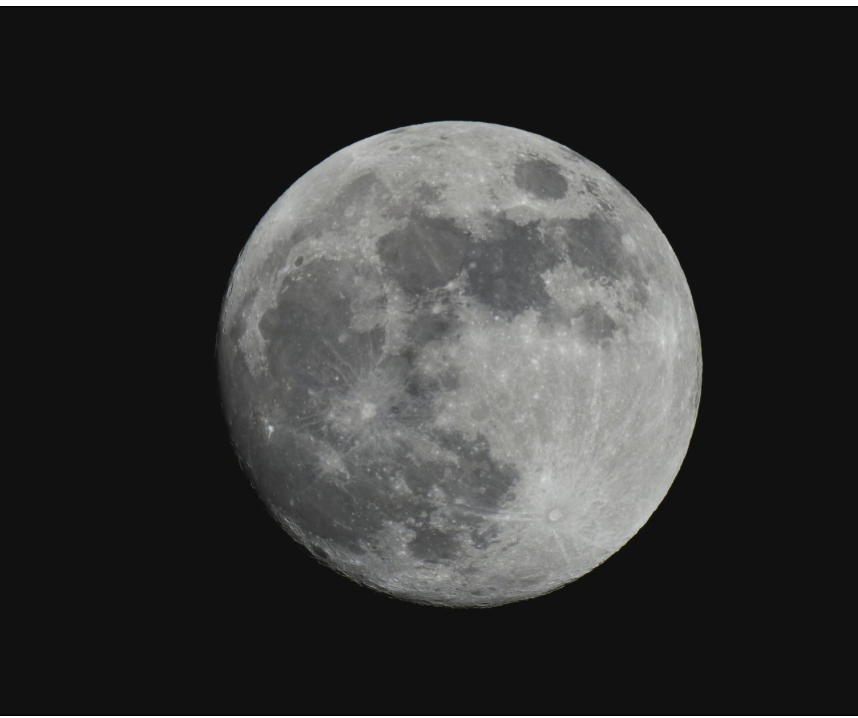
On April 1, 2026, at 6:35 PM EDT time, NASA’s Artemis II successfully launched into space from the Kennedy Space Center in Florida. It has been 50 years since the last time humans have launched into space beyond Earth’s orbit. The purpose of this mission is to make sure that we can make it past the moon and that everything works before attempting to land on the moon. There are four crew members on the Artemis II who have different specialties, ranging from pilot, commander, and mission specialist. The objectives are to make sure the navigation and communication system works, testing life-supports system in deep space, and to capture pictures of the moon’s far side.
The last time the U.S was on the moon was in December of 1972, when astronauts Eugene Cernan and Harrison Schmitt spent three days on the lunar surface, leaving in their lunar rover on December 14, 1972, with the mission splashing down back on Earth on December 19 (airandspace.si.edu, 2022). The mission was called Apollo 17 and recorded the longest rover travel, longest lunar stay, and largest sample return (airandspace.si.edu, 2022). Since then, humans have only been in Earth’s orbit, but why has it taken 50 years to send humans back to the Moon?
The moon missions back then were driven by competition during the Cold War to see which country could go to the Moon first. The U.S successfully landed on the Moon first with astronaut Neil Armstrong placing the American Flag on the Moon. After that, the urgency of space exploration and the race to the moon started to fade without the political drive. After Apollo, NASA turned its attention to missions in low-Earth orbit. Programs like the Space Shuttle program and the International Space Station allowed scientists to conduct long-term research and build partnerships with other countries. The missions were viewed as cost-efficient and practical, which still gave an insight into space exploration without the massive expense of traveling to the moon.
The Apollo mission cost billions of dollars, so without them having an exact reason, they did not see it fit to justify that type of spending for decades. There were certain disasters that occurred that led to major program delays and redesigns, reminding the world that human spaceflight requires careful planning and constant improvement. The technology used during Apollo was groundbreaking, but it wasn’t designed for long-term use. Today’s missions require more advanced systems that can support longer stays, better communication, and sustainable exploration.
I also believe it is important to recognize that Christina Koch is the first woman to travel to and around the Moon as a mission specialist on Artemis II, considering it a historical event. As previously, the missions to the Moon were male-dominated, as this is breaking the gender barriers women have faced and expanding the representation of both sexes in space. Beyond symbolism, Koch brings extensive experience, including record-setting time in space, proving that diversity and expertise go hand in hand. She is a huge influence on women around the world who have dreams of pursuing science and engineering for generations to come.
The goals of NASA are different from those they were 50 years ago, as now they want to create a long-term presence on the Moon by creating a lunar base, ongoing research, and using the Moon as a stepping stone, hence the lunar base, so that they can make their way to Mars. The 50-year gap between the missions to the Moon does not indicate any type of failure, but instead a view of different priorities that NASA had before attempting to go to the Moon again. As NASA has now sent astronauts back onto the Moon, they have clearer goals that provide an even deeper meaningful reason than before.
References