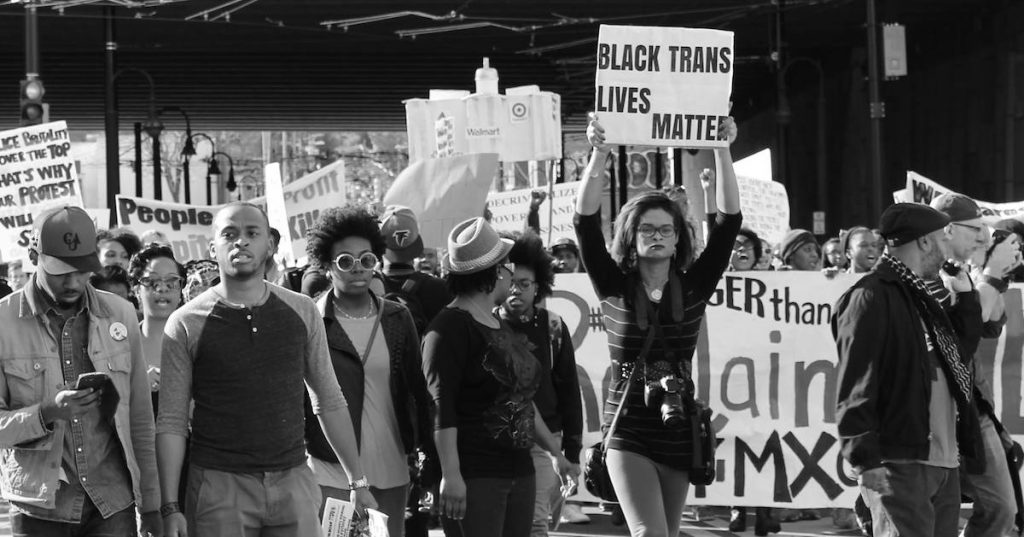
“Systems of oppression are maintained not by accident but by design” (Goldberg et al. 2026). This quote reveals much of what transgender people go through on a daily basis due to discrimination from the systems around them. This oppression is perpetuated through restrictive legislation, societal stigma, and the reinforcement within culture. They together create a cycle of marginalization that denies transgender people access to healthcare, safety, and stigmatizes them which influences the culture to treat them the way transgender people have been. Transgender individuals, in solidarity with LGBTQ+ organizations and other marginalized groups, have demonstrated that collective action changes the status quo. Systemic discrimination against transgender individuals, perpetuated by restrictive legislation and societal stigma, can be dismantled by learning from the care and support transgender people receive, fostering solidarity across marginalized groups to create legislative reforms and build a more inclusive and equitable society.
Systemic Discrimination: A Deliberate Mechanism of Oppression
The systemic discrimination faced by transgender individuals is deeply rooted in legislative and social frameworks that reinforce exclusion. Laws targeting transgender people often focus on denying access to healthcare, education, and public spaces, effectively institutionalizing their marginalization. These laws are not isolated but are part of a broader effort to maintain a system that privileges cisgender identities. As Goldberg et al. (2026) explain, “legislation targeting transgender people is not about individual morality but about maintaining a system that privileges cisgender identities while marginalizing others.” For instance, recent legislation in Idaho bill ID H0516 prohibits teachers from teaching about sexual orientation or gender identity from kindergarten to 12th Grade. These are not isolated incidents and they are being attempted all throughout the United States. This is done in direct service to those who are within the norm of cisgender individuals. Not teaching this information allows the parents of children to not expose their children to more ideas about gender identities. This leads those children who are transgender to feel othered and not feel accepted within their school community. This legislation causes people who are LGBT+ in general to feel afraid for their rights, and insecure about if they feel safe to be themselves. Rather than giving these children a space to learn and express themselves free from judgement, restrictive legislation works to restrict and keep them unknowing of other beliefs.
Through legislation, governments codify exclusion, they send a message that transgender identities are less valid, which creates a negative stigma against transgender people. It entrenches marginalization of LGBT+ people and shunts them into a people who get denied necessities for themselves. As one observed within the article from Goldberg et al. 2026, “The laws aren’t just about what we can or cannot do; they shape how people see us and how we see ourselves.” Restrictive legislation may influence public perceptions of transgender individuals by reinforcing existing social stigmas. Trans people, due to this stigma, often have to have immense wait times and hurdles in order to get the hormones they need. When medical companies deny a trans person’s medicine, or gay people are not allowed to get married, it sends a message to the public that these are people who deserve to be treated in this way. Having legislation against LGBT+ people perpetuates the hatred and stigmatization in the culture that is present against LGBT+ people.
Providing Care for Trans People
Barriers to healthcare represent one of the most significant consequences of systemic discrimination against transgender individuals. Often therapists will not have the same values on LGBT+ people as the client, so it can be difficult for trans people to findpeople find it difficult to find care. As more legislation gets pushed against trans people, those who are good fits might be more hesitant to give them the care that they need in fear of losing their jobs or facing backlash. Trans people feel more comfortable getting care from other trans people so, “There is an assumption that patients automatically get better care from trans-identified therapists… so [they] get more referrals than [they] can take and have to work harder to find them additional connections” (Goldberg et al. 2026). Trans people often want care from people who are trans so they do not have to worry about the stigma associated with it. It can cut out much of the process of finding a therapist that fits right for their needs. This in turn influences them to find therapists who are trans, which puts more pressure on the need for trans therapists which are often already fully booked. Trans healthcare providers such as therapists often experience many of the issues themselves stating, “It is difficult sometimes to support clients with the same things that [they] are worrying about” (Goldberg et al. 2026).
Though, trans providers and non-trans providers both found the most success with trans people by trans people developing community. The authors noted when discussing what worked best for providers that, “participants [of the study] spent much more time discussing community support and resources in service of hope, connection, and resilience” (Goldberg et al. 2026). The escalation in the frequency of anti-trans legislation looks more frequent, but what was proven to work is working with others in the community rather than isolating oneself. Since much of that isn’t within the client or the patient’s control, they have to look elsewhere to improve mental health outcomes. Those outcomes that proved best were those which, “emphasized mutual aid and developing relationships encouraging their clients to ‘identify who their allies are’ and to ‘lean on community’ and also sharing stories of ‘hope, resilience, and resistance’” (Goldberg et al. 2026). When working together with those who are alike oneself, the outlook which looks bleak can be mitigated. Working together in the community, and having the resilience to persist despite the challenges created by legislation allowed previous LGBT+ individuals to push for the anti-discrimination laws that we have today. Much of the therapy or counseling sessions discuss topics which are about the outlook on the legislation and the cultural outlook. Community support can mitigate some of the negative effects of discriminatory policies. Collective action may also contribute to policy reform.
Solidarity and the Future
LGBT+ organizations have provided a pivotal role in order to help un-codify the hate. As Goldberg et al. (2026) emphasize, “When marginalized groups unite, they not only amplify their voices but also challenge the systems that seek to divide and conquer.” There are coalitions of trans people that try to get legislation passed, and to gain sympathy from those who are cisgender to help. For example, in states where anti-transgender laws have been introduced, LGBTQ+ groups have organized protests, lobbied policymakers, and provided legal support to those affected. This is incredibly important for transgender people, and it shows how working together, finding those alike, and having solidarity creates the collective benefit for trans people.
Solidarity also extends to alliances with racial justice movements, labor unions, and immigrant rights organizations. Transgender people of color, for example, often face compounded discrimination due to their race and gender identity. Other minority groups face similar governmental oppression, and working together with these groups to uplift one another from those who are at the intersection of these uplift everyone. An organizer interviewed within the article explained, “Our liberation is tied to the liberation of all oppressed people,” one organizer explained. “We cannot achieve justice for one group without achieving justice for all” (Goldberg et al. 2026). People of different backgrounds and minority groups often are wanted to be at odds with one another, but finding solidarity with one another and collective action allows those who are oppressed to get the legislation that they need. Standing together with other backgrounds has created change, where often racial minority groups will help LGBT+ causes to also uplift those who are in their own community as well. Collective action and solidarity with other oppressed groups uplifts each of them from the oppression that they face, and can achieve a greater cultural understanding of the groups between one another who have similar goals.
Conclusion
The path to dismantling systemic discrimination requires both legislative reform and cultural change. On a legislative level, this involves advocating for policies that protect transgender rights, such as anti-discrimination laws and access to healthcare. These reforms are critical to addressing the structural barriers that perpetuate marginalization. On a cultural level, it requires working together with those around them to create solidarity, and to create laws protecting trans people rather than discriminating against them. Working together with other minority groups creates the solidarity necessary to create more understanding since both groups want similar goals and people often find themselves at the cross sections between many of them.
Discrimination against transgender individuals is perpetuated by restrictive legislation and societal stigma. However, found within this struggle is the need for change societally and the answer to this. Transgender people will continue to experience mental health problems, and by working with policymakers who want to help them, they can get the outcomes that they need. Rather than being alone, they can work together to address structural inequities that have been created by people who do not want them to have access to or information about them as a group. By addressing the structural barriers of discrimination, fostering alliances across marginalized groups, and promoting education to challenge societal norms, society can move toward greater inclusivity and justice.
Take Home Points
- Systemic oppression against transgender people is deliberately maintained through restrictive laws, societal stigma, and cultural reinforcement, creating a cycle that denies them access to healthcare, safety, and dignity.
- Anti-transgender legislation not only enforces exclusion but also shapes how society views transgender identities, fueling stigma and reinforcing discrimination in everyday life.
- Building community and solidarity is essential for transgender individuals to find hope and resilience, as collective action and mutual support can help counter the harm caused by systemic oppression.
- Real change begins by learning from the care transgender people receive, fostering alliances with other marginalized groups, and pushing for laws that protect and uplift, rather than harm, those who are most vulnerable.
References
Goldberg, A. E., Boskey, E. R., & Redfield, E. (2026). The experiences of transgender providers of gender-affirming care: Scrutiny, stress, and solidarity in sociopolitically turbulent times. Psychology of Sexual Orientation and Gender Diversity. https://doi-org.lib-proxy.fullerton.edu/10.1037/sgd0000927
Konnoth, C. (2025). President Trump’s executive order and the wrongful suspension of pediatric gender care. RamaOnHealthcare. https://ramaonhealthcare.com/president-trumps-executive-order-and-the-wrongfulsuspension-of-pediatric-gender-care/
Lopez, X., Singh, P., Choudhari, P., Baker, S., Chen, C.-A., Vivar, J., & Kuper, L. E. (2025). Effects of the sociopolitical climate on distress and relocation of families of transgender youth. Transgender Health, 0(0). https://doi.org/10.1089/trgh.2024.0039
Redfield, E. (2025). Impact of ban on gender-affirming care on transgender minors. Williams Institute. https://williamsinstitute.law.ucla.edu/publications/ impact-gac-ban-eo/